
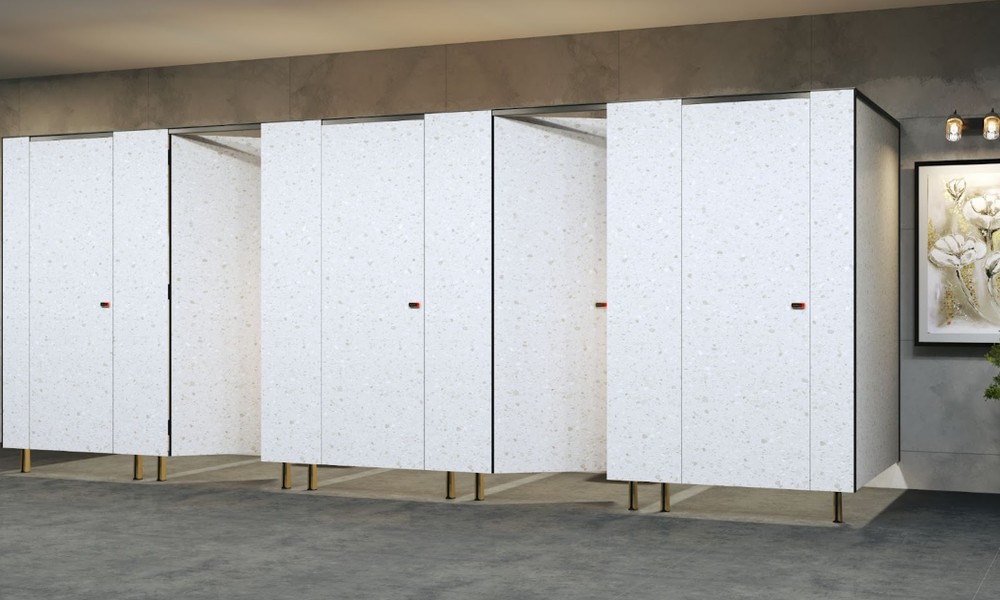
Toilet partition specification carries documentation requirements that affect LEED v4.1 credit achievement in Material and Resources categories. Project teams that defer this specification without evaluating LEED documentation availability risk substituting products during value engineering that cannot meet credit submission requirements.
Which LEED Credits Do Partition Products Affect?
Toilet partitions contribute to 3 LEED v4.1 Material and Resources credit categories:
- MR Credit 2: Building Product Disclosure and Optimization, requiring Environmental Product Declarations
- MR Credit 3: Building Product Disclosure and Optimization for material sourcing, requiring recycled content and regional manufacturing documentation
- MR Credit 4: Building Product Disclosure and Optimization for material health, requiring Health Product Declarations for finishes and adhesives
What Is the Difference Between Product-Specific and Industry-Wide EPDs?
LEED v4.1 accepts both product-specific and industry-wide Environmental Product Declarations, but they contribute differently to credit documentation strength.
Product-specific EPDs provide a single manufacturer’s verified environmental impact data. Industry-wide EPDs cover a product category and provide compliant documentation where product-specific declarations are not available. Not all partition manufacturers have completed the Type III EPD process, making early sourcing verification essential before the construction document phase.
Which Partition Materials Have the Strongest Recycled Content Credentials?
Recycled content credentials by material type:
- Stainless steel: strongest post-consumer recycled steel content per unit weight
- Phenolic: can incorporate post-consumer recycled fiber content in the kraft paper layers
- High-density polyethylene: recycled content varies by manufacturer and must be documented
- Powder-coated steel: post-consumer steel content available but varies by production source
Specifiers selecting sustainable toilet partitions for LEED projects should request recycled content percentages, regional manufacturing documentation, and EPD availability from shortlisted manufacturers before finalizing specifications.
How Does Regional Manufacturing Affect LEED Credit Eligibility?
LEED regional sourcing credits require that products be extracted, processed, and manufactured within 100 miles of the project site. For most domestic U.S. projects, this means verifying the specific manufacturing plant location rather than assuming national brand availability equals regional compliance.
Manufacturers with multiple production facilities may be able to confirm regional sourcing compliance for specific projects that would not be achievable from a distant primary facility. This verification should be documented in writing during the submittal phase.