
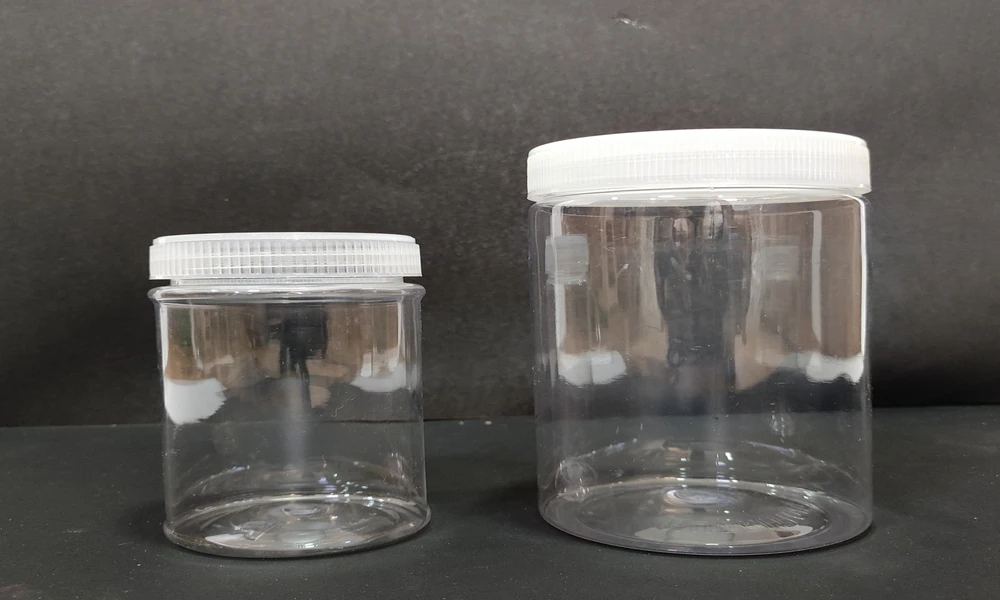
A jar looks like the least consequential decision in a product line and turns out to influence shelf life, breakage in transit, filling line speed and how the product is perceived on a shelf. Choosing a Plastic jar is mostly a question of matching resin, wall thickness, neck finish and closure to what goes inside it, and the same reasoning applies whether you are packing a thousand units or organising a store room.
The Resins and What They Suit
PET is clear, rigid and has good barrier properties against oxygen, which makes it the default for anything where product visibility matters. HDPE is opaque, tough, chemically resistant and inexpensive, and is the standard for cleaning products, powders and industrial contents. PP tolerates heat better than either, resists oils well and suits hot-fill applications and anything that will be washed repeatedly. PVC and PS appear in specific applications. The resin choice usually follows from the contents rather than from appearance.
Neck Finish Is Not a Detail
The threaded portion at the top of a jar is specified by a standard designation covering diameter and thread style, and it determines which closures will fit. Getting this wrong is one of the more expensive packaging errors because it renders a delivery of jars or a delivery of caps unusable. Confirm the neck finish in writing when ordering, and if you are changing supplier for either component, check compatibility before committing to a full run.
Closures and Sealing
The closure does most of the work of protecting the contents. A plain screw cap with a liner suits dry goods. An induction seal, where a foil membrane is bonded to the jar rim by heat, provides tamper evidence and a genuine barrier, and is standard for food and cosmetics. Child-resistant closures are required for certain products. Flip-top and dispensing closures suit contents used in small amounts. Each has cost and line-speed implications worth establishing early.
Wall Thickness and Handling
A jar has to survive filling, capping, packing, palletising, transport and a customer’s grip. Thin walls save material and money and fail at exactly one of those stages, usually the one involving a pallet. Thicker walls cost more per unit and reduce breakage claims, which are more expensive than the material saving. Squeeze a sample and consider the load: a jar at the bottom of a stacked pallet carries the weight of everything above it, and top-load strength is a specification worth asking for.
Clarity, Colour and Light
Clear jars display product and let light reach it, which matters for anything light-sensitive. Amber and opaque containers block a portion of the spectrum and extend shelf life for vulnerable contents. Colour also carries information on a shelf, and consistent colour across a range makes a line recognisable. If you are matching an existing product, ask about colour tolerance between production batches, since a visible shift halfway through a run is difficult to explain to a customer.
Chemical Compatibility
Not every resin suits every content. Essential oils, solvents, strong acids and alkalis can degrade, cloud or permeate the wrong plastic over time, and the failure often appears weeks after filling rather than immediately. Where contents are aggressive, request compatibility data and run a shelf-life trial with the actual formulation before committing to a large order. Suppliers of industrial plastic containers should be able to advise on this rather than leaving it to the customer to discover.
Food Contact and Compliance
Anything holding food must be manufactured from food-grade material and, in practice, you should be able to obtain documentation confirming it. Check whether the jar is suitable for hot filling if your process requires it, since a resin that deforms at fill temperature ruins a batch. Also consider whether the container will be reused by the consumer for storage, which is common with jars, and whether it is dishwasher and microwave safe accordingly.
Labelling and Decoration
How the jar carries its identity affects both cost and flexibility. Pressure-sensitive labels are the most common and the easiest to change, which suits businesses running several variants or expecting artwork to evolve. Shrink sleeves cover the full body and allow a wraparound design at higher unit cost. Direct printing looks the most integrated and commits you to a design for the life of the tooling. Whichever route, check that the surface is compatible with the adhesive and that a curved body will not cause a flat label to wrinkle, which is a common and avoidable irritation on smaller diameters.
Storage and Reuse
Beyond packaging, jars are working storage in kitchens, workshops and laboratories. Wide-mouthed formats suit anything scooped rather than poured. Square bodies use shelf space far better than round ones and stack without wasting corners. Clear bodies let contents be identified without opening. For reuse, a removable gasket that can be washed matters, since the groove around a seal collects residue and eventually stops sealing properly.
Ordering Sensibly
Establish the contents, the fill temperature, the required barrier, the closure type and the shelf life, then specify the resin and neck finish from those. Ask about minimum order quantities, lead times and whether stock sizes are held locally, since a standard Plastic jar available from inventory is considerably cheaper and faster than a custom mould, and for most applications it does the same job.